
Don’t trust an expert just because he’s an expert.
Readership: All
Theme: Community
Length: 850 words
Reading Time: 4.5 minutes
A Life-Changing Epiphany
Earning a Ph.D. changed my world view.
Earning a Ph.D. in engineering requires one to develop, manipulate, and master a small pocket of theoretical knowledge that is both new and practical.
At the time of my final defense examination, I was discussing my doctoral research with my advisors, five men who were all extremely accomplished, world class experts in their fields. As I delivered my defense, I noticed that each one of them understood the aspects of the ¡ScIeNcE! that had already been developed, but they did not fully comprehend the new contributions I made to ¡ScIeNcE! as well as I did. In fact, they were totally clueless about some of the details of my work. They really didn’t know if it was correct or not. When this realization sank in to my conscious awareness, I knew that I had truly become a “doctor of philosophy”. I knew something that the most brilliant minds in my field did not.
It was also extremely humbling, because I came face-to-face with the limitations of the human mind. There is so much more beyond our understanding that even the best minds cannot comprehend.

The next big shocker was when I found that some of my work was indeed erroneous, but my advisors never knew it.
I realized that doctors make mistakes, just like everyone else.
Doctors are humans too.
Thus, it is easy for me to understand why highly educated individuals are the least likely to “trust the experts”.
Furthermore, I’ve learned that it is not wise to trust doctors blindly and completely. Being human, it is quite possible for even the finest and most diligent doctors to make mistakes or less than optimal decisions.
Worse, doctors who are less conscientious will, over a lifetime of practice, devise methods to maximize their income through choosing certain diagnoses and approaches to treatment over others.
You see, there are lots of ways to handle a patient without blatantly violating the Hippocratic Oath or being pulled into court for malpractice.

Latent Malpractice
The medical, pharmacological, and psychological professions are incentivized to deliver less than optimal treatment.
For example,
- It’s easier to give the patient what they want than what is best for them.
- Doctors are pressured to cave in to social trends that have legal backing, such as what happened with The Gender Dysphoria Epidemic.
- The legal risk of malpractice incentivizes doctors to modify their treatments in order to protect themselves instead of delivering the most optimal treatment.
- Pharmaceutical companies give doctors a monetary incentive to push their pills, which are often new and more or less experimental. The patient plays the guinea pig.
- Using older technology is sometimes easier and more profitable than using newer technology, because they don’t have to buy expensive equipment and go through the training to use it. The patient suffers accordingly.
- Obstetricians prefer to do C-sections over natural delivery because then (1) they don’t have to poke and prod a hairy vagina and listen to the mother wail and blabber on while they wait, sometimes for hours, for the baby to drop out, (2) they can schedule more deliveries in a day, and (3) they also get paid more for the surgery.

Case Study — Antidepressants
When doctors prescribe treatments to target specific problems, they will prioritize offering treatments they are most familiar with that address that specific health issue and will not always consider or even tell you many of the implications and side-effects that come with that treatment.
Also, doctors have many patients, so they will not spend hours and weeks to study one patient’s condition to find a better diagnosis and treatment.
Commenter Jax wrote,
“Sleep quality, or lack thereof, is what I suspected was the cause of my low T. But my GP suggested that that alone wouldn’t cause such a low level. I don’t know, honestly. I’m at a normal level now (thanks to medication) despite still unrefreshing sleep. The average day sees me with heavy eyes and wanting to take a nap, although I’m generally unable to.
[Jack] mentioned in a previous post that [he] believes that antidepressants have had a lasting, negative effect on [his] sleep. I naively did a course of antidepressants in my early 20s. It wouldn’t surprise me if the same is true for me. A sleep study found nothing significant.”
You don’t have to be a doctor to read up on medical information, connect the dots, and put 2 and 2 together. But don’t be surprised if your doctor blows off your conclusions as ill informed, folk medicine, or mere conjecture. He’ll do what is best or easiest or most profitable for himself first, and what is best for you second.
Conclusions
The medical, pharmaceutical, and psychological industries are teeming with rancid Red Pill truths that are hidden away and underdiscussed.
Doctors often choose what is easiest, quickest, most beneficial, or most convenient to THEMSELVES, rather than what is most beneficial to the patient’s long term interests.
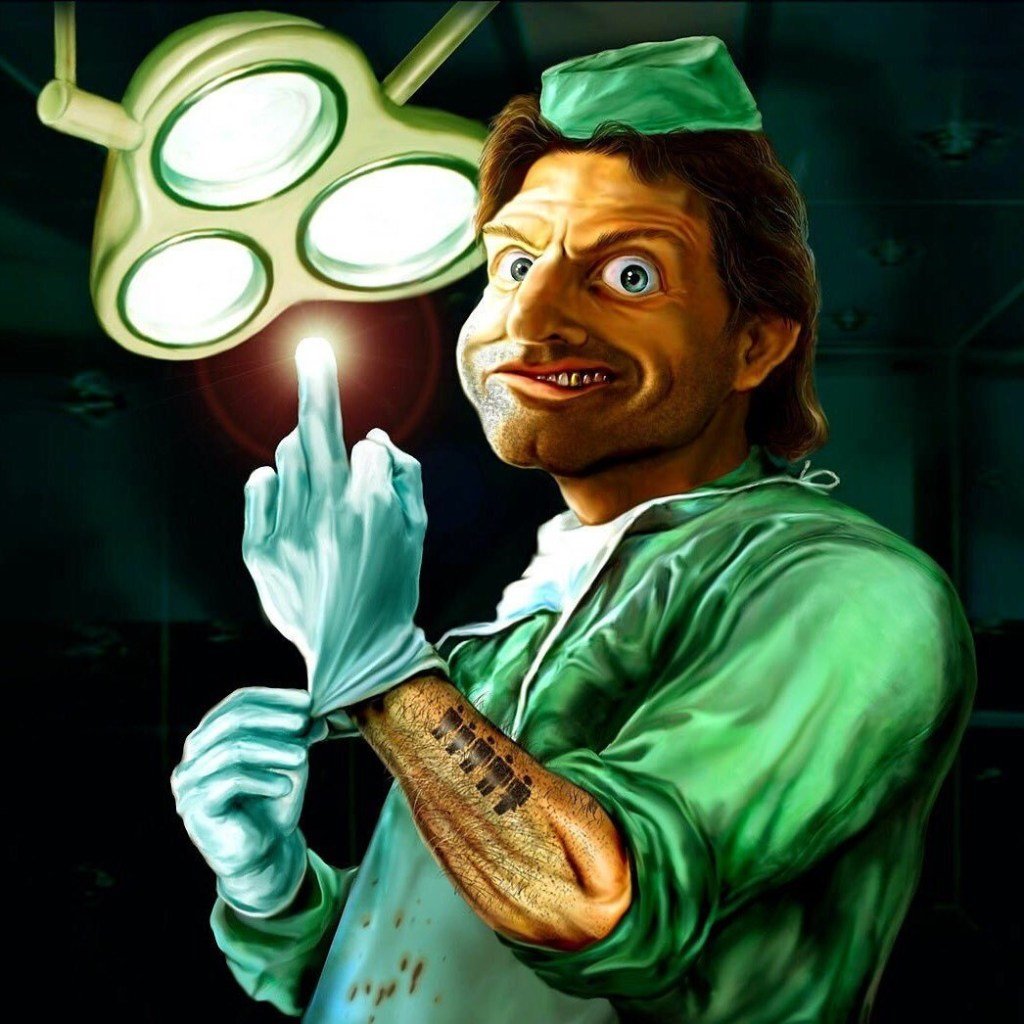
Doctors will fail to tell you some information and/or relatively more convenient, easy, simple, and less invasive treatments for any number of reasons.
Some information is intentionally withheld, or blocked or shadowbanned on the internet.
Think for yourself. Always do your homework. Don’t blindly trust experts. Your own health and well-being hang in the balance.
Related
- Σ Frame: WHO the Health Cares? (2011/9/19)
- Buzz Feed: We Asked Experts To Explain Why People Don’t Like Experts (2016/6/23)
- Investment Watch: Gallup: Americans Tend to Trust Only News That Confirms Their Beliefs — Highly Educated Americans Are By Far The Most Closed-Minded Group (2020/9/27)
- The Daily Sceptic: The Most Educated Are the Least Likely to Get Vaccinated Against Covid, According to New U.S. Study (2021/8/11)
