
¡Sc!eNt!f!C! evidence from The Great Baumeister.
Readership: All
Theme: Awareness and Introspection; Rationalism; Validation; Virtue;
Length: 1,400 words
Reading Time: 8 minutes
Intro
Prof. Roy F. Baumeister is a highly esteemed psychologist who was widely cited within the Manosphere 1.0.
Here, I’ll cover one of his papers about the power of the imagination to shape outcome.
Roy F. Baumeister, E. J. Masicampo, and Kathleen D. Vohs, (2011) “Do Conscious Thoughts Cause Behavior?”, Annual Review of Psychology. 62:331–361. DOI: 10.1146/annurev.psych.093008.131126 [PDF]
In this paper, Baumeister et al. pose the question of whether conscious thoughts of a particular action can affect whether or how that action will be performed later.
At 31 pages long, this publication is quite comprehensive in its coverage. Readers who have the brain power, the time, and the interest are invited to click on the link and read the full article, or at least check out the table of contents to find specific points of interest.
For the rest of us who lack a vise-grip concentration with laser precision, I’ve paraphrased the key points of the article for easier digestion. A summary is given at the end. There are many cited works; interested readers can go to Baumeister’s original paper to find them.

Imagined Behavior Increases that Behavior
Research has found that imagining oneself doing something can increase the likelihood or the efficacy of doing it, especially on some future occasion. This phenomenon is manifested in a multitude of psychological contexts, including…
- Anticipating, Planning, and Intending
- Replaying, Interpreting, and Reflecting on Past Events
- Reasoning, Deciding, and Solving Problems
- Anticipating Counterproductive, Maladaptive Effects
- Mentally Simulating Others’ Perspectives
- Manipulations of Self-Regard and Self-Affirmation
- Mental Framing and Goal Setting
- Communication and Mutual Understanding
- Overriding Automatic Responses
Here, I won’t go into every one of these areas covered by Baumeister, but just offer enough evidence for readers to get the gist. Go read his paper to learn more about the power of the imagination in these specific applications.
Evidence A — Cable TV
Based on behavioral evidence furnished by Gregory et al. (1982), Anderson (1983) showed that imagining oneself doing something led to an increased intention to do it. In this study, some participants imagined themselves getting and using a cable television service. These participants were later more likely than controls to accept a promotional offer of a week’s free service and, two to three months later, were more likely to be subscribed to the service. Control participants had been provided with the same information about the service, but had not imagined themselves being subscribers.
Evidence B — Therapy
A number of psychotherapy patients were randomly told either (1) about the benefits of remaining in therapy, or (2) to imagine themselves remaining in therapy for four weeks. The latter group remained in therapy for a longer time on average (Sherman & Anderson 1987).

Imagining Actions (NOT Outcomes) is Most Effective
The effects of mental simulation often depend on the person focusing on what he or she will do to carry out the action, rather than on motivations, a vivid prospect of success, or creating a self-fulfilling prophecy.
Evidence C — Study Habits
Pham & Taylor (1999) randomly assigned students to mentally simulate doing well on an exam, either by imagining themselves finding out that they had gotten a very high grade or by imagining themselves studying hard and answering the questions on the test. Only the latter condition produced significant improvement in actual test grades. Along the same lines, mental simulation helped reduce the planning fallacy, increasing the proportion of students who actually finished their assignments on time (Taylor et al. 1998).
Evidence D — Voting
Imagining oneself voting can increase the likelihood of actually voting in a subsequent election. The evidence for this is mixed, possibly varying among different elections (see Greenwald et al. 1987, Nickerson & Rogers 2010, Smith et al. 2003). Libby et al. (2007) found the simulation effect to work best if people imagined themselves from a third-person perspective rather than first-person. The authors suggested that seeing oneself from a third-person perspective led to making dispositional attributions, thereby making voting seem to reflect the person’s character and values.
The Benefits of Mental Practice
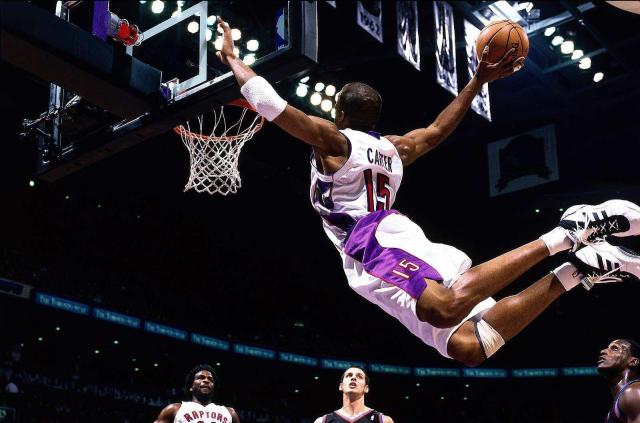
Another category of simulating future actions is mental practice, which usually consists of imagining oneself performing a physical, artistic, or athletic skill effectively.
A review of research on mental practice by Grouios (1992) concluded that mental practice combined with physical practice was generally found to be more effective than either by itself, suggesting that both contribute to learning. It concluded also that mental practice is mostly helpful during the early stages of learning (thus useful for acquiring rather than maintaining skills) and should focus on the muscle movements needed for successful performance.
If Grouios is correct, the fact that conscious simulation is most beneficial at the early stages points toward a general pattern in which things move from initially conscious to gradually being more automatic. Consciousness is assumed to be necessary for acquiring new behaviors. A large meta-analysis by Driskell et al. (1994) found that mental practice improved performance significantly, especially when tasks included a cognitive component and the performance was not long after the mental practice. They did conclude that physical practice worked better than mental practice (but see Cooper et al. 2001, Wohldmann et al. 2008).
A more recent review by Kosslyn & Moulton (2009) noted that researchers have studied mental practice in almost every conceivable sport, from dart throwing and table tennis to football, soccer, basketball, gymnastics, and even weight lifting. It has also been shown to be beneficial in playing a musical instrument (Theiler & Lippman 1995), landing an airplane (Prather 1973), and training basic surgical skills (Sanders et al. 2004). In general, these studies show that it does reliably improve performance. A report of the National Academy of Sciences concluded that mental practice was one of the few allegedly performance-enhancing activities that is genuinely effective (Druckman & Swets 1988).
Evidence E — Table Tennis
Mental practice combined with physical practice improved table tennis performance, especially if the mentally simulated practice focused on muscle movements rather than imagining the trajectory of the ball (Caliari 2008). The latter finding suggests that the individual using mental practice has to imagine the motor movements and muscle control required for performance, not simply think about any aspect of the game.
Evidence F — Golfing
A well-designed early research (Woolfolk et al. 1985) studied college students mental practice of golfing in relation to their putting performance. By random assignment, some students visualized a successful putt; others visualized just barely missing the hole; and a control group was told to visualize putting without any specific instructions. (It was expected that this group imagined both process and outcome differently.) The participants who had visualized success then showed dramatic improvement as compared to the control group. Those who had visualized failure via a near miss showed a drop in performance. The last effect suggests that conscious processes are not always beneficial.
Brouziyne & Molinaro (2005) demonstrated that mental practice combined with the physical practice of golf produced performance that was better than physical practice alone.
Evidence G — Eating Habits
Imagining doing an activity does not always result in doing more of the same.
A study by Morewedge et al. (2009) offered evidence that mental simulation can help satisfy and satiate, as if substituting for actual consumption. In this study, the test participants imagined eating a large amount of candy, and the control groups included those who imagined themselves (1) eating a small amount of candy, (2) eating some other food, and (3) a no-food condition. During an ostensible taste test, the control groups ate more of the candy, compared to the test group, who ate less of the same candy, as if they had already gorged on candy and had become tired or sick of it.

Conclusions
A large amount of research in the psychology behind all kinds of decisions, the behaviors of various habits, and nearly every sport has shown that consciously imagining a simulation, such as imagining actions, and the mental practice of a skill, does contribute to later behavior. An effective mental imagery seemingly needs to focus specifically on behavioral practices and processes that lead to desired outcomes, and not just on the decision-making process, motivations, or outcomes. It is believed that conscious simulation functions as a kind of mental rehearsal rather than merely stimulating motivation.
Related
- Σ Frame: Trajectories (2020/2/28)
- Σ Frame (Red Pill Apostle): The Meet Cute as a Positive Feedback Loop (2021/11/17)
- Σ Frame: The Winner Effect (2023/8/30)
- Σ Frame: Summary of Chemistry (Testosterone) (2023/8/31)
- Σ Frame: Belief, Cognition, and Faith (2024/8/15)
- Σ Frame: Everyone is Nuts (2024/11/22)
- Σ Frame: Overcoming the Spiritual-Sexual Poverty Mentality (2025/2/24)
