
What’s the connection?
Readership: Men
Theme: Rationalism
Length: 1,500 words
Reading Time: 8 minutes
Intro
Back when Roe vs Wade was repealed in 2022, I heard Liberal Feminists defending abortion by saying that higher abortion rates are correlated with lower crime rates.
As IF that’s an equitable tradeoff.
I’ve recalled this idea from time to time, each time asking myself, “Yeah, well, if that’s true, then what is the connection?”
In September this year, I did some research to find out whether this is true.
Spoiler: It is apparently true. But why?
The Connection between Abortion and Crime
The correlation between higher abortion rates and lower crime rates is attributed to the Donohue-Levitt hypothesis, first described in a 2001 study by economists John Donohue and Steven Levitt, and discussed in the book Freakonomics, by Steven Levitt and Stephen Dubner [Amazon]. Their hypothesis [1-3] suggests that legalized abortion (i.e., the 1973 Roe v. Wade decision in the U.S.), led to a reduction in crime rates roughly 15–20 years later, in the early 1990s.
 John Donohue and Steven Levitt.
 Here’s the reasoning behind the connection.
Empirical Evidence
Donohue and Levitt’s study analyzed data across U.S. states, finding that…
- States with higher abortion rates in the 1970s and 1980s saw larger declines in crime rates in the 1990s.
- A (normalized) 100% increase in abortion rates correlated with a roughly 10–20% decrease in crime rates after about 15–20 years.
- States with earlier access to legalized abortion (e.g., New York, California) saw earlier crime declines compared to states with later access.
The Donohue-Levitt hypothesis is supported by the following facts.
- Abortion rates rose immediately after Roe vs Wade, and then crime rates dropped about two decades later.
- The 20 year span aligns with the age when those “missing” cohorts would have reached their late teens and early twenties, a peak time for criminal behavior.
The fact that crime rates drop approximately 20 years after a spike in the abortion rate apparently proves that abortion selectively culls criminals before they’re ever born.
Needless to say, the Donohue-Levitt hypothesis is acutely controversial, as it can be interpreted to imply that certain ethnic, racial, or socioeconomic groups are inherently more prone to abortion and crime. The closer to being true that it is, the more unacceptable it would be.
The Donohue-Levitt Hypothesis
Donohue and Levitt estimated that abortion could explain up to 50% of the drop in crime during that period, controlling for other factors like policing strategies, economic conditions, and incarceration rates. They presented the following hypotheses to explain their reasoning.
1. The Link between Poor Life Conditions and Abortion / Unwanted Births
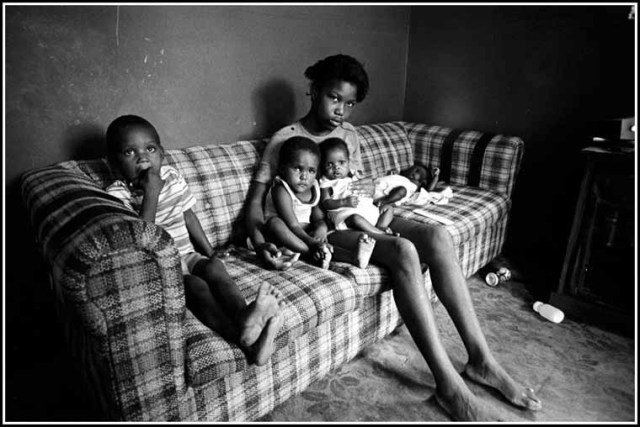
The hypothesis postulates that women who want abortions are more likely to be women facing difficult, poor, or unstable life conditions. The additional costs and time invested in raising a child, tend to worsen the socioeconomic conditions of these mothers. These adverse conditions lead to an increased likelihood of their children engaging in criminal activity as adolescents or adults.
The weak point of this hypothesis is the likelihood, prevalence, and strength of this link. There is a larger number of women who are quite capable of having and raising children under relatively favorable life conditions, but who opt for an abortion because they do not want children for any number of other reasons. Sources estimate between 51% to 96% of women who have an abortion choose it as a form of birth control.
2. The Link between Unstable Home Environment and Crime
The hypothesis states that legalized abortion allowed women, particularly those in disadvantaged socioeconomic situations, to avoid giving birth to children who might grow up in environments associated with unstable family structures, domestic violence, neglect, and poverty, leading to higher risks of criminal behavior. It is theorized that fewer unwanted children (due to abortion) leads to fewer individuals entering high-risk demographics for crime.

Here, it may be assumed that children who grow up in broken, dysfunctional, or poor homes invariably become practicing criminals. Again, the weak point of this hypothesis is the likelihood, prevalence, and strength of this link. Cue the arguments about Blank Slatism and Nature vs Nurture.
3. Causal Mechanisms
Beyond socioeconomic factors, the hypothesis suggests that abortion reduces the number of children born into environments with limited resources, poor parenting, or exposure to crime, all life conditions that are correlated with higher criminality. It also assumes that women who choose to have an abortion may be making a rational decision about their ability to provide children a stable upbringing.
The weakness of these assumptions is in the prediction that a relatively greater proportion of those women who elect abortion would otherwise bring children into the world who would be destined for criminal behavior. Surely there is some overlap, but how much cannot be ascertained. The number of aborted children who would NOT become criminals is not known.
Caveats and Counterarguments
Critics have noted that the Donohue-Levitt hypothesis’s heavy focus on abortion oversimplifies complex social issues.
For example,
- Changes in family dynamics during the 1980s and 1990s, such as the increased divorce rate, may have had a significant impact on crime rates, potentially overshadowing abortion’s role.
- Other studies have suggested that these effects may vary across populations, with some analyses finding weaker or no significant correlation when controlling for additional variables.
- Some studies suggest that removing lead from gasoline, paint, and other products, which coincided with the time that crime rates fell in the 1990s, led to reductions in lead exposure, which may have had an impact on mental health and thus criminal behavior.
- International data is mixed. Countries with different abortion policies show varied crime trends, suggesting other context-specific factors are in play.
Some critics argue that the correlation does not imply causation. Other factors, like improved policing, economic growth, or the decline in crack cocaine use, may have also contributed to the falling crime rates in the 1990s.

Natural Selection
There’s another unspoken piece of the story. Like absent Feminist mothers raise dimwit Disneyfied entitled daughters who have no Game, leading to an epidemic of Karens, many youngsters who are unloved and unwanted by their mothers become criminals, despite whatever socioeconomic background they may have.
But we can’t ask women to … (ahem) God forbid, actually love their kids. No, we’re expected to allow those stupid slores to kill their own d@mn kids before they become unloved children who turn to crime and thus become a burdensome embarrassment to society.
So, according to the Feminists’ argument, if we allow presumptive mothers to preemptively mur_der their fetal bastard brats who are bound to become criminals, via their poor fate of being born to hump happy harpy harridan mothers, then the crime rate drops.
Makes perfect sense. Natural selection in vitro. Darwin lives on! /S
Yes, abortion takes a bite out of crime. It also takes a bite out of any demographic being selectively aborted.
However, the bite per chomp is relatively small. Again, recall the reported statistic that killing twice as many babies results in 10-20% less crime two decades later. What about the other 80-90% of supposedly non-future-criminal babies who were also vacuumed into the blender in the process of taking their 10-20% of criminal peers off the futuristic streets?

The Logical Conclusion
Let’s apply these statistics to a practical application for reducing crime. Assuming the future crime involves mur_der, the Liberal argument that abortion reduces crime, according to the Donohue-Levitt hypothesis, could be construed to say that allowing women to kill 100 babies now will prevent 10 mur_ders 20 years from now. If a 50% increase in abortion means only 5-10% of the resultant reduction in crime corroborates with abortion, then maybe if we increased abortion up to 500+%, then we could totally eradicate crime (as well as the whole population after a few generations of this cycle)! Now there’s a tradeoff that totally justifies abortion! /S
Aside from jest, in essence, they’re arguing that mur_dering human fetuses is OK, but crime is not.
It compares to the ancient blood sacrifices to appease the gods.
As Thedeti said,
“When men pay for a society, it’s set up capitalistic. You pay for it with time, work, and money.
When women pay for a society, it’s set up socialist. The only way to pay for a socialist society is in blood. Human blood. Rivers of blood.
Just in the 20th century, an estimated 100 million human beings were slaughtered in the names of Nazism, fascism, Marxism, and Soviet/Chinese communism. Literal human sacrifices upon socialism’s altar.
Not to mention over 40 million souls sacrificed in the name of feminism and Roe v. Wade.
The cost of “fairness” and socialism is always paid in human blood. The false gods of “economic fairness” and “social justice” demand payment in human blood.”
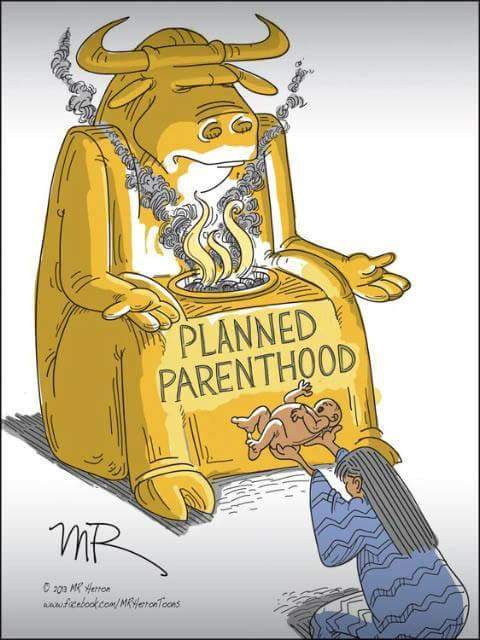
On a positive note, maybe some of those aborted kids would’ve become divorce lawyers, gynocentric judges, and corruptible progressive politicians. By eliminating them, we’ve saved a few marriages and staved off the decline of civilization. That might be worthy of a ¡$c!eN+!f!c! study. /S
But of course, liberals would never state their stance in these words. Foremost because it’s the detestable, unvarnished truth. Second, the reality is just way too damn ugly.
But they’re quite happy to cite these statistics to insistently defend mur_der in the womb.
References
- Donohue, John, and Steven Levitt. 2001. “The Impact of Legalized Abortion on Crime.” The Quarterly Journal of Economics, 116(2):379-420. [PDF]
- Donohue, John, and Steven Levitt. 2004. “Further Evidence that Legalized Abortion Lowered Crime: A Reply to Joyce.” Journal of Human Resources. 39(1):29-49. [PDF]
- Donohue, John, and Steven Levitt. 2006. “Measurement Error, Legalized Abortion, and the Decline in Crime: A Response to Foote and Goetz (2005).” National Bureau of Economic Research, The Quarterly Journal of Economics, 123(1):425-440. [PDF]
Related
- The Guardian: Freakonomics 10 years on: Stephen J Dubner and Steven D Levitt on what they got right and wrong (2015/5/15)
- Σ Frame: A Deeper Look at Contraception and Abortion (2019/11/9)
- Σ Frame: Abortion and Birth Control (2019/11/26)
- Σ Frame (Oscar): No Mo Roe (2022/6/27)
- Σ Frame: No Mo Roe, No Mo Hoe! (2022/6/29)
- Σ Frame: The Abortion Bottleneck (2023/7/19)
- Σ Frame: Abortion is a Betrayal! (2023/11/11)
