
Machiavellianism is one of the most misunderstood concepts in personality psychology and men’s empowerment.
Some see it as synonymous with deceit, while others mistake it for pure evil.
But true Machiavellianism is neither—it’s about strategic thinking, adaptability, and playing the long game to win.
At The Power Moves, we specialize in the psychology of power and influence. After reviewing the full body of research and integrating it with real-world experience, we provide a clear, practical, and continuously updated guide to understanding and applying Machiavellianism.
Let’s dive in.
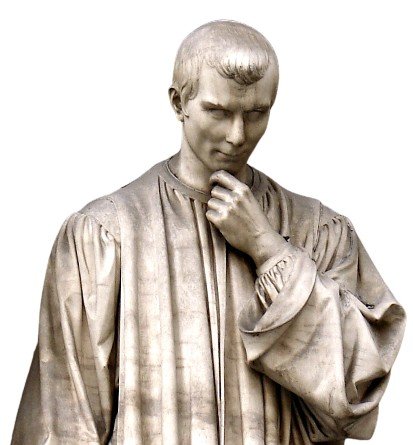 Machiavelli, author of “The Prince“
Contents
What’s Machiavellianism
Definition:
Machiavellianism is a personality trait peculiar to self-centered and amoral individuals who pursue personal advancement through a calculative, rational, and opportunistic approach to life
This definition is unique because it excludes manipulation and cheating.
Deception is at most a consequence of Machiavellians’ predispositions, not a primary trait.
Indeed studies have shown that, when cheating doesn’t pay, Machiavellians cheat less than non-Machiavellians.
Why Learning Machiavellianism
Says Tamás Bereczkei:
Their self-assuredness and goal orientation provide them with immense advantages over others in gaining material goods and favorable positions. In contrast, low Machs are concerned with personal relationships and moral norms that often make them vulnerable.
And says Maria Konnikova:
In one series of studies, when a high Mach was placed in a situation with a low Mach, he tended to emerge ahead in most any scenario.
Konnikova, 2016
It makes sense.
Machiavellians tend to be charismatic, charming, and leaderlike.
Couple that with a strategic and opportunistic approach to life, and you get why Machiavellians win.
And “winning” is why you want to learn “how to be more Machiavellian”.
Machiavellian Traits
These are the defining traits of Machiavellianism:
1. Self-centered
Machiavellians put their self-interests first.
A 2014 study aptly titled “Valuing myself over others” found that Machiavellians value individual pursuits over collectivist values such as “loyalty to the community”.
“What’s in It For Me” Keeps Machiavellians Goal-Focused
The Machiavellian is the ultimate “homo economicus”.
He asks himself “What’s in it for me”?
And if the answer is “not much”, he sees no point in expending effort.
Non-Machiavellians are more likely to waste time and resources because they regard it as a moral obligation to do their duty.
2. Influential
People consider Machiavellians to be charismatic and effective leaders (Deluga 2001).
Machiavellians are skilled at managing appearances and first impressions.
And they come across as intelligent even though research shows they’re no more intelligent than others.
More persuasive liars
Research shows Machiavellians are also better liars: more persuasive, and coming across as more innocent.
It’s an innate ‘skill’ displayed already as children.
3. Dominant
Say Christie and Geis commenting on their studies:
Machiavellians initiated and controlled the structure of bargaining interaction in the group. They were overwhelmingly the dominant, decisive, and sought-after member of the triad.
By controlling group dynamics, Machiavellians heavily influence the outcome.
The best thing?
People were happy to oblige.
Machs Are Good at Making Others Want to Follow Them
Machiavellians might use coercion, if they can.
But often, they don’t need to because people look up to Machiavellians for directions.
To make people want to follow is the hallmark of prestige and true leadership.
Christie and Geis say it’s not possible to say if Machiavellians are charismatic, or if non-Machiavellians are UNcharismatic and socially inept.
However, the net result is the same: Machiavellians get what they want because others happily oblige.
3. Strategic

Robert Hare famously said that psychopaths see the world as a chessboard.
But later research showed that the true chess grand masters of the dark triad are the Machiavellians.
4. Calculative
Machiavellians are good calculators.
They cheat and deceive, but only when the benefits exceed the costs.
And if the risk/reward ratio is poor, they’ll act morally.
If their calculation suggests that “prosocial giving” is best for them, they will even be altruistic.
5. Amoral
Machiavellians do what’s good for them independently of moral principles.
In social exchanges, Machiavellians don’t feel bound by reciprocity or “fairness”.
In a classic sociological experiment on trust and theft, high Machs stole from those who had previously trusted them.
By contrast, non-Machiavellians gave up substantial material gains to obey fairness and responsibility norms.
6. Opportunistic
Machiavellians are the princes of opportunism,
Even Machiavellians’ expressions of (a)morality is opportunistic.
There is a difference between amorality and immorality.
Immorality means going against morals. Amorality means not having morals and doing what’s expedient.
Says Bereckzei:
In most cases, they are unwilling to help others.
But they are ready to support unknown individuals when they are aware of being observed by members of the community. That way, they maintain their prestige (or its illusion) in the group (Bereczkei, Birkas, & Kerekes 2010).
Modern Machiavellian marketers aren’t even bound by physical audiences. They’ll set up the cameras themselves:

Says the “charitable man” in the video after handing out $1.000 dollars:
Machiavellian marketer:
some people say I shouldn’t do stuff like this and put the video public (…) to show off <— Raises the most likely criticism to address it and control the narrative
And there is some truth to that <— Strategic agree part of the agree-and-redict technique
Although <— Bridge to set his frame
I think there is so much negative media, I think it’s OK to publish some positive stuff <— Justifies his PR move as “spreading positivity”
Nice power moves.
He gives both supporters and the naive masses a reason to believe his actions are well-meaning.
7. Cynic
A man always has two reasons for doing anything: a good reason and the real reason.
Machiavellians are suspicious, and attribute negative traits and intentions to others.
But they’re honest about their cynicism, and view non-Machiavellians as weak hypocrites.
In turn, that makes it fair in Machiavellians’ view to take advantage of them.
There may be downsides to over-cynicism though.
Some scholars suggest Machs preemptively cheat believing it’s only a matter of time before they’ll get cheated on. And that may turn win-win into win-lose.
8. Realist
Machiavellians concentrate on what is -and how to exploit it-.
Non-Machiavellians instead easily get lost in “how things ought to be”, or “what’s fair”.
9. Pragmatic
Machiavellians aren’t motivated by appeals to higher values.
To them, that’s hot air BS for the gullible.
Instead, research shows that Machiavellians are motivated by extrinsic motivations such as money, power, and influence.
10. Rational
Machiavellians are generally more rational than non-Machiavellians.
It’s because non-Machiavellians are more easily swayed by IRrational reasons.
11. Emotionally Cool

Christie and Geis call this the “Cool Syndrome”.
Machiavellians think more rationally and consider all available options and possibilities in a cold-minded manner (Pilch, 2008), less swayed by emotions (Deak, 2017).
“Muted” empathy, but effective strategists & manipulators
Here is a quick overview of the empirical findings:
Machiavellians score lower on some types of emotional and social intelligence tests.
But they performed well when agreeableness was eliminated and they had something to gain.
And when they could gain through manipulation, they were very effective manipulators.
The same goes for “mind-reading skills”.
Machiavellians may be average or poor mind readers. But they score above average when they can manipulate others.
“That’s why we critiqued the pop-psychology view of emotional intelligence (Goleman, 1995).
A more comprehensive construct, including strategic, self-interested, and manipulative aspects, is essential.
Emotionally Cold Leadership
A famous cinematic moment of Machiavellian cold-bloodedness and strategic thinking:
Godfather: It’s not personal, Sonny. It’s strictly business
Michael Corleone gained everyone’s respect when he displayed cold detachment and superior strategic thinking.
That’s when he became The Godfather.
12. Fluid
Machiavellians aren’t just strategic, they are fluidly strategic.
Says Bereczkei:
Machiavellians (…) do not follow pre-existing schema (…) The uniqueness of the Machiavellian character lies in (…) flexible decision-making (…) and continuous weighing-up of the situational conditions.
Fluidity has been shown in experimental settings:
Machiavellians earn large profits in social dilemma games but once the experimenters enable free-riders punishment, they restrain their profiteering and increase their cooperativeness (Spitzer et al. 2007).
Even during a mock business negotiation, Machiavellians used more persuasion tactics, and adapted more flexibly to the changing situation.
Mach & Dark Triad
The dark triad includes Machiavellianism, psychopathy, and narcissism.
Albeit the grouping has been criticized, it can be a useful construct.
Narcissism
There are two types of narcissists:
- Vulnerable narcissists: thin-skinned, neurotic, potentially depressed, harbor secret grandiosity but outwardly shy
- Grandiose narcissists: high self-esteem, socially bold, entitled, arrogant, low observable anxiety
Psychopathy
- Factor 1 psychopathy: (primary) selfish, remorseless, and exploitative. It doesn’t necessarily include antisocial personality disorder and is sometimes associated with ‘successful psychopathy’
- Factor 2 psychopathy: (secondary) impulsive, irresponsible, sensation-seeking. Can be chronically antisocial (APD), and likely to end up -or remain- in prison
Machiavellianism
Machiavellianism overlaps most with grandiose narcissism, and type 1, subclinical psychopathy.
Psychologist Minna Lyons reports that Machiavellianism may even be a manifestation of non-clinical psychopathy.
Summarize John & Paulhus:
Narcissism predicts ego-promoting outcomes, psychopathy predicts reckless and antisocial behavior, and Machiavellianism predicts a strategic orientation
In brief: Machiavellianism is the most strategic and, potentially, effective of the dark triad.
Contrary to narcissists, Machiavellians disregard their egos for what’s effective. And contrary to psychopaths, they can postpone rewards and play the “long game”.
Advantages of Machiavellianism
By now the advantages of Machiavellianism should be obvious.
But for clarity:
1. Higher Odds of Life Success
Machiavellians are more likely to:
- Obtain leadership positions (Spurk, 2015)
- Have more sexual partners (Jonason et al., 2009)
- Achieve more material success (McHoskey, 1999)
2. More Self-Reliance
Machiavellians are more resistant to both group pressure and individual pressure.
Says Christie and Geis:
Non-Machiavellians instead “are more likely to do or accept what another wants simply because he wants it”.
Paradoxically, non-Machiavellians may be more likely to execute heinous orders to comply to authorities and social pressures.
3. Higher Internal Congruence, No Self-Manipulation
Machiavellians don’t lie to themselves because they don’t need to.
They’re comfortable with their dark side, and that means they also experience little or no cognitive dissonance.
4. Most Likely to Become Leaders
As we’ve seen, Machiavellians lead newly-forming groups.
But some systems and environments also favor the election of a Machiavellian.
For example, people prefer Machiavellian leaders when they feel under threat (Wilson et aI., 1998).
And Americans may prefer more Machiavellian presidents (Deluga, 2001; Simonton, 1986).
… And potentially better leaders
Geis and Christie examined real-life leadership situations in their classes.
And they noticed that:
Groups with their highest Mach member as leader did better (…) got whatever resources they possessed organized and applied more effectively than other groups.
5. Antifragile Ego (Almost) By Default
Machiavellians take things less personally (Grande, 2019).
For example, an experiment showed that after an interviewer disapproved of the research subjects, the non-Machiavellian girls changed their self-descriptions, but high-Mach girls did not.
This low ego investment makes for a natural predisposition towards an antifragile ego.
6. Growth Mindset (Almost) By Default
A growth mindset is much easier to achieve when you’re not busy defending your ego.
Christie and Geis’ experiments indirectly tell us that Machiavellians are potentially better learners:
The non-Machiavellians are more likely to be upset or angry (…) Machiavellians are more likely to be curious (…)
Disadvantages of Machiavellianism
The downsides of Machiavellianism include:
1. Poorer Relationships
 Refusing to hold his hand can signal a lack of bond and mutual support
Low empathy, power-craving and an overly calculative approach can make for poorer relationships.
Research suggests that people prefer non-Machiavellians for close relationships such as confidants, good friends, or business partners.
And employers are dissatisfied with high Machs (Bereczkei, 2017).
The inability to see beyond pure self-interest, and to bond and connect can be costly for life satisfaction as well, contributing to low life satisfaction and alienation.
That’s one of the reasons we had some concerns with the popular literature on Machiavellianism such as “The 48 Laws of Power“.
Avoided by Higher Quality People
While this is more speculative, it follows logic that the better one is at reading people, the more he avoids overly scheming and cynical individuals.
That means that Machiavellians may struggle to remain close to high-quality people.
I’ve observed this pattern in my life, and we’ve had some circumstantial examples on the forums.
2. Potentially Bad for Business Reputation
Manipulation and opportunism carry risks.
As David Sloan notes, even after successful manipulations, Machiavellians may suffer a reputation loss that erodes their social capital, and reduces future opportunities.
Although former Gambino family underboss Sammy Gravano wouldn’t feature in research articles, success in a Machiavellian organization lends him some credibility.
And the wisdom he shares with his brother-in-law supports our hypothesis:
‘You’re right, they can’t do nothing, but you know what will happen? Everybody will hear about it
Underboss, 1999
(…) This will be the best two hundred thousand I’ll ever spend because people will say not only is Sammy qualified to do the job, but he’ll stay with you, win or lose.’ ’That’s important to businesspeople, Eddie,’ I said. ‘That’s why you were never successful in business. Because you scheme too f*cking much.’
Gravano refers to maintaning a reputation as a coopertor to elicit more win-win cooperation, an approach vaildate by game theory research (Axelrod, 1984).
Over-scheming may not even qualify as “core Machiavellianism”: a smart Machiavellian would never cheat when repeat win-win is possible.
But it’s a risk when conjoined with poor long-term thinking.
3. Low Performance in Structured Work Environment
Say Paulhus and Delroy:
Machs remain cool, exploit interpersonal relationships, bend the rules, and improvise. When this flexibility is constrained, Machs are likely to incur problems.
But this is not necessarily a drawback, and more a question of job fit.
Where should Machiavellians go, then?
Well, Hunt and Lawrence (1984) found plenty of Machiavellians among marketers.
Not surprising, since much marketing is based on (mild) manipulation.
Also see:
4. Life Dissatisfaction & Alienation
Machiavellians are more dissatisfied at work and with their role in everyday life (Ali et. al., 2010).
Despite their higher partner count, Machiavellians are also more dissatisfied with their sex life.
Even deeper, Machiavellians are alienated.
They feel alienated in their personal relationships. They believe they are isolated, and that their life is meaningless.
The gap in life satisfaction grows even larger when the “dark triad” is contrasted to the “light triad” composed of “Kantianism”, “humanism”, and “faith in humanity” (Kaufman et al., 2019).
We can speculate that Machiavellians are dissatisfied because of:
- Focus on material pursuits (“hedonic treadmill“)
- Overly-cynic attitude
In short: when it comes to life satisfaction, it might pay to be good (TPM note: as long as “good” doesn’t mean “naive”).
Paranoia
Related to dissatisfaction and psychological health, and somewhat unsurprisingly, research also associated Machiavellianism with paranoia (McHoskey, 2001).
Now our question becomes:
Is it possible to combine the advantages of Machiavellianism, while avoiding the downsides?
Read on.
The “Effective Machiavellian™“
Effective Machiavellianism™ is the ultimate stage of strategically optimazing the Machiavellian trait. It distills the functional strengths—rationality, emotional coolness, adaptability, and strategic thinking—while removing maladaptive tendencies like excessive cynicism. It treats Machiavellianism as an amoral, neutral toolset capable of delivering high-level effectiveness, while reducing the costs to maximize life quality.
Effective Machiavellism is the goal; Strategic Machiavelliasm™ is the work.
There is no one-size-fits-all to ‘maximize Machiavellianism’ because it depends on the individual’s starting point.
But, generally speaking, it must calibrate to the situation and strike an optimum balance between the “overly Low-Mach” (who is often naive and vulnerable) and the “overly High-Mach” (who is alienated and predatory).
Here are some good steps:
1. Add ‘Mach Mode’ Atop ‘Honor’ (Honorable Machiavellianism 🦅)
Honorable Machiavellianism™ builds on Effective Machiavellianism by placing strategic honor™ and a preference for win–win as the baseline, while maintaining a Machiavellian scanner that assesses people and tracks give-and-take and risks to ensure positive returns (strategic calculativeness™).
When needed, the honorable Machiavellian can completely switch to a Machiavellian Mode of strategic action and ruthless detachment.
Adopt a:
- Honorable baseline behavior with a Mach mode for undeserving people and special situations
OR:
- Machiavellian baseline with an honorable mode reserved for the best people and situations
We recommend the former.
Honor can also help combat alienation and dissatisfaction. And you can further boost life quality with a mission and finding meaning in life. See effective spirituality and positive psychology.
2. Calibrate & Switch ‘Modes’ (Ruthless/Loving)
Some situations call for ruthless, strategic coldness—your Machiavellian side.
Others deserve your best self—the ‘light triad.’
So the “secret” is to take Machiavellian’s own strategic fluidity, and adapt it to Machiavellianism itself.
Learn to switch modes depending on context, goal, and people. Some contexts call for your Machiavellian mode, while others call for your best self.
3. Develop the “Machiavellian Scanner” (& Keep It Always On)
The scanner picks up all relevant cues for:
- Leverage: Who has more, how can I increase mine?
Risk: could he screw me over? What’s the cost, and how do I mitigate it? - Social power dynamics: Win-win, neutral, or disempowering?
Risk: is he disempowering me? One-upping, social climbing, undermining… ? - Value: Taker, giver, or matcher?
Risk: are they making me worse off?
From Naive to Machiavelli: Can You?

The 1-million dollar question:
Is it possible to become more Machiavellian?
Christie and Geis, the psychologists who defined Machiavellianism, asked the same question in their seminal work Studies in Machiavellianism.
Their take? “It’s probably possible.”
From experience, we’d say it’s more than just probable. It’s a learnable skill.
That’s exactly what Power University is built for: delivering the power of Machiavellianism, without the toxicity:
