
99% of all manipulation resources are terrible.
0.5% of great content on manipulation comes from this website.
And the other 0.5%… I’m still hoping to find it.
OK, there are a few good things scattered here and there in this list.
But no single resource that combines high expertise, clear examples, and a clear roadmap to help people understand and deal with manipulation.
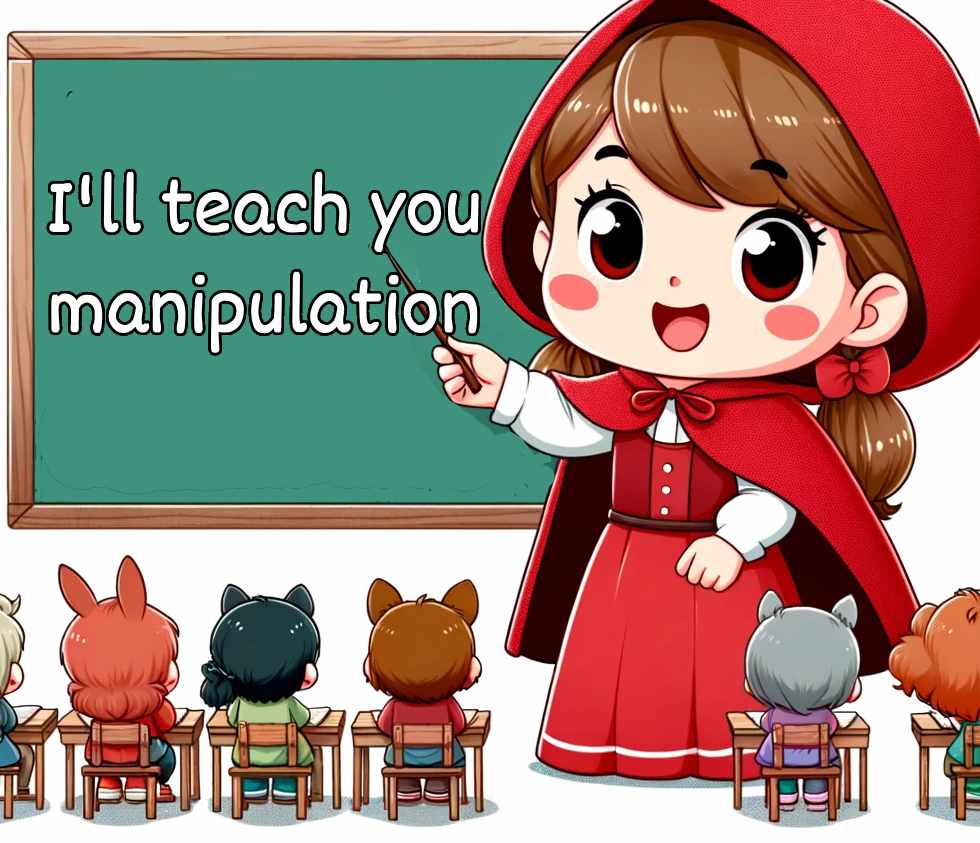
This is how most manipulation resources feel to me
INTRO
This is my philosophy:
TPM articles carry a “burden of responsibility”.
The responsibility to add the most possible value to our readers.
So I take them seriously, and prepare myself before writing.
Part of my preparation includes looking at what’s already available.
And every time, without exception, what’s available has been a disappointment.
Example: Manipulation Tactics
We’ll use “manipulation tactics” as an example for this article.
But what we say for “manipulation tactics” is true for manipulation and “games people” in general.
I chose this specific example because when I looked up other articles on “manipulation tactics”. I was even more disappointed than usual.
Why?
Because the highest-ranking articles for “manipulation tactics”are shockingly poor.
Which is somewhat ironic since they’re all “high-authority” websites.
But to me, this is how they all feel:
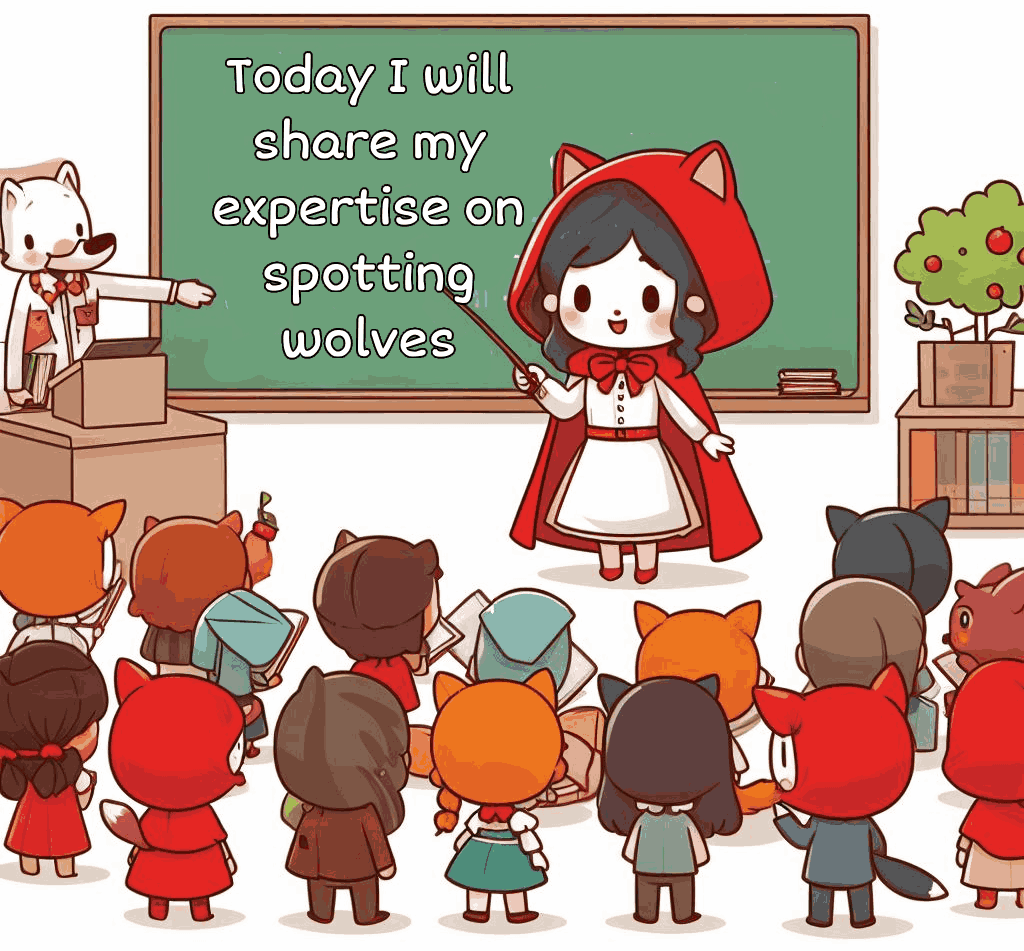
We’re in good hands!
The Issue With Manipulation Resources
Some of the issues common to 99% of manipulation resources include:
1. Basic information, with no hint of more advanced tactics
Basic articles serve a purpose since many people need to start from somewhere.
But it’s an issue when all of them are basic.
And not a single resource bridges from basic, to more advanced material
2. No examples means lack of clarity
Almost all available resources have little examples, and zero real-life examples or videos.
That’s an issue because readers do not get any sense of what manipulative tactics look like in real life.
For example, imagine the victim reads:
“gaslighting is a manipulation tactic that makes you doubt reality”.
Without gaslighting examples he never gains the ability to spot gaslighting in his life
3. Little understanding of power dynamics and manipulation dynamics
Manipulation IS about power.
Or, at least, it’s in good part about power.
So understanding power dynamics is foundational to writing about manipulation.
Most articles lack a good understanding of manipulation because they’re clueless about power dynamics.
And about the power-hungry personality’s psychology.
4. Re-hash jobs (copying us… Without always crediting)
Don’t take my word for this.
Try it.
Google “manipulation tactics”.
And go through a few articles or videos.
And you’ll see the same tactics over and over again.
Including the same mistakes and limitations.
Edit:
I see some improvements as more people learn from us:
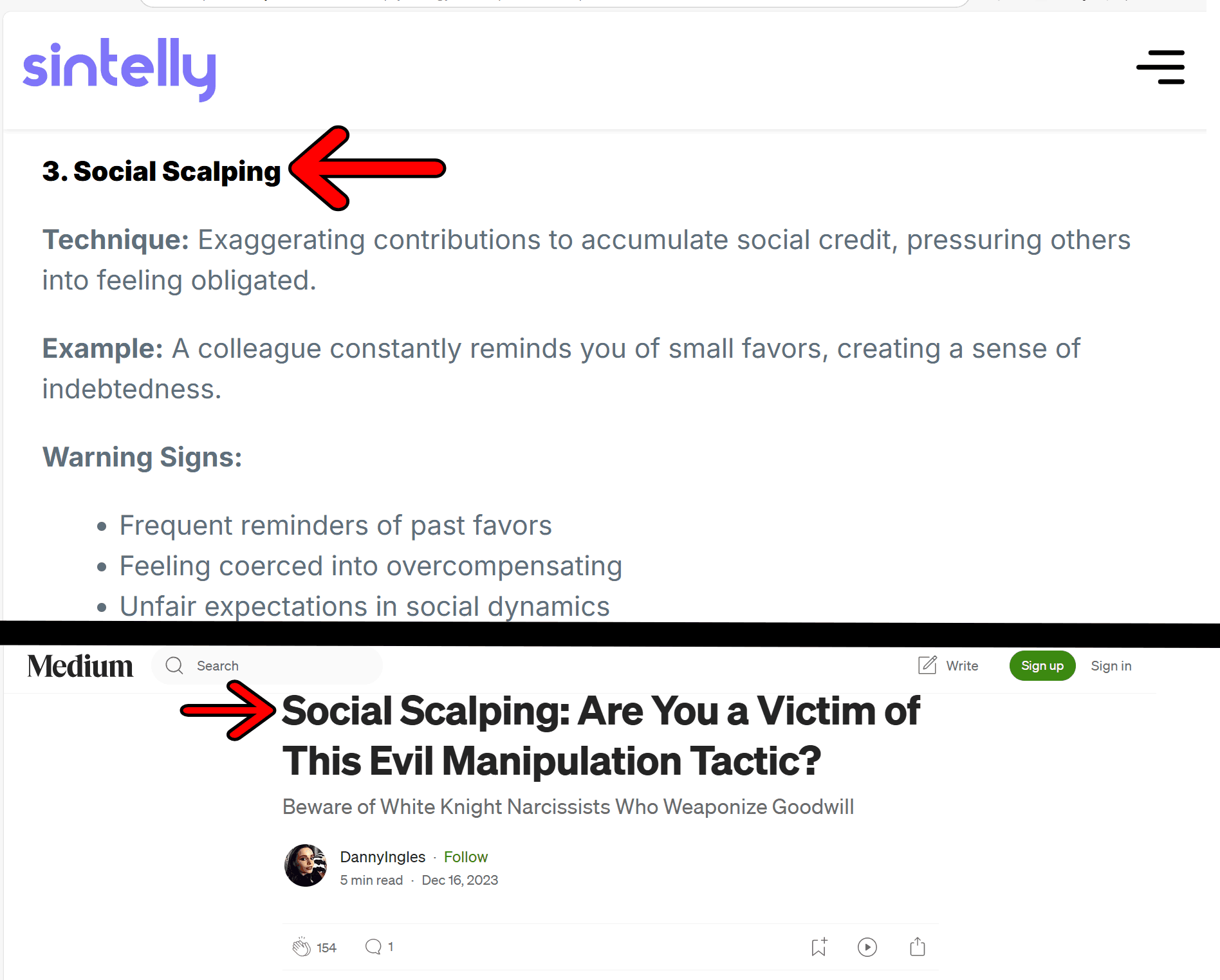
Social scalping is a concept we first described and linked to social exchanges. We thank those who link or quote us and hope more will choose to be honorable and give due credit
What’s the one common thread in all these issues?
It’s this:
There Is No Expertise
The main reason, is this:
Few people seem to have advanced expertise on this topic.
And I’m being charitable by adding the word “advanced”.
Those who have it, are busy using that expertise.
But even them, I suspect, operate mostly unconsciously.
The authors who write and talk about manipulation often have Ph.D.s or clinical experience.
And still many show a limited understanding of manipulation dynamics.
In part, I can understand it.
It’s a very complex issue at the intersection of power dynamics, social exchanges, games people play, personality disorders, uncomfortable introspection, and sometimes even therapy when the manipulator is within, or within our families.
As a matter of fact, I believe that few people understand manipulation unless they are good manipulators, or had good manipulators in their families.
And good luck facing up to that.
What I can understand a bit less though, is that there is an appalling lack of clear thinking behind most resources on manipulation.
The lack of any real thinking is obvious to me because it’s not just advanced manipulation dynamics that are lacking.
It’s also basic power dynamics, social exchanges, or even the acknowledgment of the shared selfishness that makes us all humans.
In the case of manipulation tactics, even the meaning of the word “tactic” is lost (see below).
The only common thread of the incoherent hodge-podge lists that clutter Google is to list whatever sounds “negative”.
A few exceptions apply such as Harriet Braker or George Simon.
They’re great authors with good insights.
But still, nobody provides a full, coherent overview of the topic.
No Expertise = Ineffective Solutions
Most of the available resources also fail to offer truly effective solutions.
That’s to be expected.
How can I a non-expert deliver effective solutions on a topic that, intrinsically, requires high sophistication?
Solutions aren’t even just about simply understanding manipulation.
Solutions also require a deeper understanding of social dynamics.
And a more strategic approach to social dynamics.
Solutions require some Machiavellianism.
Example
As an example, imagine a girlfriend threatening to breakup.
Funny enough, that was listed as yet another “manipulation tactic”.
To begin with, that’s more of a power move, rather than manipulation.
But an author lacking power awareness may miss the underlying dynamics.
With the threat, the woman is (sub)-communicating loud and clear that she has no respect for him (as a man).
And the solution is NOT the therapy that some sources suggest.
As much as we’re not the website for “alpha VS betas” here, a good part of the solution does come down to personal power and confidence (or lack thereof)
Therapy only makes you look like more of a beta male looking to have his feelings mended.
This is a case that does require some high power alpha male approach.
The true root-cause solution is for the man to work on his power.
Including his ability to lead and command respect.
Blunder Examples: Manipulation Tactics? Nope…
As we mentioned before:
Many of the most popular and expert-written articles lack a clear definition of manipulation tactics.
I’m going to list now some of the “manipulation tactics” listen in these top-ranking articles, written by licenses or high-authority “experts”.
Some examples of “manipulation tactics” that are NOT tactics include:
Gaslighting
is a cluster of manipulation tactics -and a large cluster-.
It’s not a distinct manipulation tactic
Seeking control
is a motive that leads the controller to use manipulation tactics.
It’s not a manipulation tactic per se.
Also, listing “seeking control” as a manipulation tactic is confusing.
It’s confusing because almost any driven human being “seeks (more) control”.
Good men also seek more control. So the question is not whether one seeks control or not.
The question is about how, how much, and what costs they’re willing to inflict to get that control.
Also see our article on:
Passive aggressiveness
is an interpersonal approach and a cluster of behaviors.
Passive aggressiveness may include a host of manipulative tactics, but not necessarily so.
It’s also not a tactic.
I’d also like to ask those who include “passive aggressiveness” in a list of manipulation tactics: can you please tell me how a passive aggressive exactly successfully manipulates another man?
Coercion
imposes on others by leveraging real power to impose one’s will.
Coercion is NOT manipulation because it’s direct and open and in your face.
Manipulation is hidden.
Coercion may only be manipulative when it’s a gambit not backed by real power. But then it’s not coercion but more a “coercion attempt” or a “gambit”.
Example: governments coerce citizens to pay taxes. But that’s not manipulation. Manipulation would be to frame taxes as a moral obligation and not paying taxes as immoral.
Stages of manipulative relationships
are possible stages of an abusive relationship, not tactics.
Also, only some manipulative intimate relationships follow those (rather pop-psychology) stages.
Such as, you can be in a relationship with an inveterate manipulator and never go through any listed “stage”
- Etc. Etc…
We could go on and on.
But the long story short is:
stick to TPM when it comes to learning, spotting, and dealing with manipulation :).
