Moose Norseman’s latest post brought up some interesting points that I want to address regarding the demonization of masculinity in the Church.
[…] In large block letters down the sleeves were the words “MEN OF VALOR” in all capital letters.
I thought the words on the sleeves was tacky, but the Crusader’s shield and cross is a powerful symbol. It’s “bad ass.” And it seemed profoundly sacrilegious to see these men wearing it.
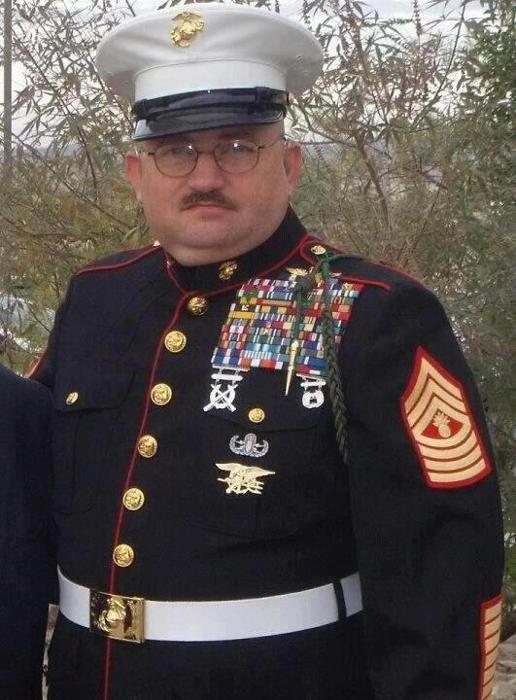
Grown men playing dress-up, pretending to valor until their wives tell them it’s time to go home, LARPing as patriarchs and defenders of the faith for a morning, like the fat guy in the outrageously fake “master funnery sergeant” uniform.
I wanted to punch them.
See, this is the same men’s group that gleefully passed around an obviously fake “letter” attacking fathers, exuberant over a chance to denigrate themselves and assure each other that, after all, their wives and children were perfectly justified in rebelling against their God-ordained leadership.
Then my anger faded, and I just felt sad.
Sad because those shirts show that those men really do want to be patriarchs, men of valor, defenders of the faith. They wouldn’t pretend to it if they didn’t value it.
Sad because they have managed to convince themselves (at least partially) that they aren’t pretenders: that “True Valor” is assisting the enemy in slicing their own neck; that defending the faith means arguing with each other over words to no profit, such as whether the communion wine becomes Christ’s blood, or is only a very powerful symbol of His blood; that being a patriarch means following the whims of their wives and children.
To be honest, the reality is worse than Moose even realizes.
The worst thing is that many men think that shaming themselves for the sins of other men — not even the men/boys they are responsible for which are their family — makes them feel better about their current position as pseudo-leaders with their pseudo-morality and pseudo-religiosity. Their shame at their lack of leadership when they are shamed away from leadership is worn as a badge of honor to the sins they don’t commit.
One cannot look further than most of the “don’t rape” stuff that men are indoctrinated with from a feminist culture. If you’re a man and you don’t rape why would you even give such drivel attention in the first place? Because you think you can take on “shame” for your sex and have it mean something? Do you think you can apologize for someone else’s actions and have others care? Can you apologize for others’ actions and have it mean something? No. This is why I laugh at patriarchy rants.
But worst yet is the men and fathers who do want to be leaders who take on the shame and the blame of others who they are attempting to guide when the others make mistakes? And when they do they think it means something good or holy?
That my friends is straight up blasphemy. And it is probably one of the most insidious aspects of the demonization of masculinity by the Church.
To think for a second that I can control others, or be responsible for their sinful actions is false thinking. Sure, I can influence it to some degree, but at the end of the day people are making sinful choices from their heart. Not mine. The vast majority of humans understand cause and effect on a subconscious level. Men and fathers who taken on the blame for the poor choices of their wives and children and experience shame for that are doing the same thing that a rich parent does when their snotty nose brat goes to jail: they cover it up with their own shame and money. All it does is reinforce poor behavior.
To embrace masculinity
Men are taught not to have firm boundaries. However, firm boundaries are what they need to succeed in the position of headship and leadership. Men need to understand that they do still have the burden of headship even if they make mistakes in headship duties. However, that doesn’t mean you take on shame and responsiblities for the actions of others when they have free will just like you.
The Scriptures are clear to the people underneath authority that they still have the free will to do what is right regardless of their situation. To wives with husbands who don’t believe the Word — 1 Corinthians 7 and 1 Peter 3. To Christians under government authority — Romans 13, 1 Peter 2, Hebrews 13, Titus 3.
Christian men need only understand this. That each man is held accountable for:
- His actions
- His roles
- His responsiblities
Christian men are not held accountable for:
- His wife’s actions
- His wife’s roles
- His wife’s responsibilities
Once you understand boundaries more clearly, it is much more easy to hold people accountable for their mistakes even when you have made a simultaneous mistake.
I think this is one of the most difficult parts of authority, headship, or leadership to master. Men like to believe that because we made a mistake that it all falls on us. We don’t want to look like hypocrites where we failed and need to demand responsibility from those under us. We want to take more of the blame and shame than necessary because we think it will protect those under us. This is where our instinct to provide and protect which is normally good goes off the tracks. Shielding others from consequences sends the wrong message — the spoiled rich kid message.
Biblical roles and responsibilities are not something you can put off if you make mistakes. You are still held accoutable for the role and responsibility regardless of if you seem like the “worst” Christian husband on the face of the planet. Thus, you must understand that even if you feel like you’re the worst hypocrite, and you feel that you need to take the shame and blame you still have a responsibility. That responsibility is to hold others accountable for their actions that are under your authority.
It’s taking responsibility to say: “hey, I made a mistake here and I want to apologize for that. Also, you made a mistake here as well. We both need to go to Jesus and repent for our sin, and turn from those sins so next time in the future we both don’t do wrong. Or if, God forbid, one of us does wrong the other person won’t respond in kind.”
Leadership in the midst of conflict: that is where men are made.