
…are somewhat opposed.
Readership: All
Author’s Note: This post was co-written by Jack and NovaSeeker.
Length: 3,900 words
Reading Time: 21 minutes
Introduction
The discussion under Parental Divorce Ruins Daughters’ Future Marital Commitment and Confidence (2021/2/24) captured much of the conversation about the importance of rules, and how the rules can no longer be followed with a positive outcome, but only a lot of suffering — which kind of sums up Eric’s main contention.
Of particular note, this conversation between Deti, NovaSeeker, et al., offered several viewpoints about how the rules are now ambiguous and impossible to follow.
This discussion also contained a couple of ideas that I think are important issues that tie into The Christian Conundrum (2021/3/1) and The Christian Marriage Dilemma (2021/2/26). These are…
- Internal Traits — Flexibility, adaptability, determination, charisma, and other personality traits, etc. Scott’s approach to marriage is an example of this.
- External Environment — About rules and expectations. My approach to marriage is an example of this.
People tend to internalize the external environment, making it part of their identity. This can then lead to an identity crisis when the external environment doesn’t match up to their internalized concepts, which are often shaped by personal ideals. For Christians, this would be doctrinal stances and moral rules.
All in all, I see the conundrum issue coming down to a conflict between ideals and realities, and this is a topic that continues to come up in the sphere over the years. Some people just can’t deal with too much of a difference between the two.
The Covert Contract of following the Rules
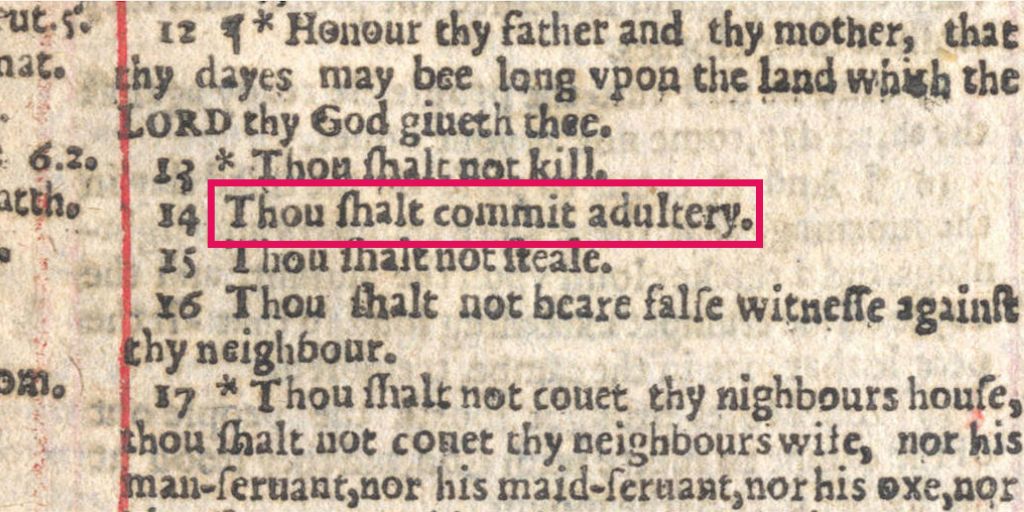
For Christians, there is a tendency to think that they can get what they want out of God, life, etc. by following rules of conduct and morality in an effort to fit the ideal, thinking that this is what it means to be a “good Christian”, obedient to God, etc. But all our own efforts to pursue sanctification, holiness, and the blessings in life are never enough. This approach never fully connects with God or reality, and it fails to hit home with people. This is kind of like the Pharisees in Jesus’ day, or the older brother’s approach in the story of the Prodigal son, or Javert in Les Miserables, as I discussed in More on the Framework of Options (2021/3/22). The point of this post was that Clinging to the “Rules” can cause a lot of confusion and legalism, and it misses the larger point of connecting with God and loving others.

Guys in the Christian Manosphere are guilty of this too. We have a desire for good wives, but women are just not up to par. (Women are saying the same about the men.) So then women are dismissed (vetted out) because they don’t fit the Christian mold. It’s a very mechanical, rules-based approach. Not much has been said about how to connect with reality and make an impact (other than through overt sexual relations).
This is where the rubber hits the road, so to speak.
It’s definitely a case where there are ideals, on the one hand, and a reality, on the other, that don’t match, and that one way guys are trying to deal with that is by trying to screen / vet / improve / narrow things so that they can get them to line up as much as possible so as to manage outcomes.
I don’t think that’s a great approach because it’s trying to pound a square peg into a round hole. Besides, a lot of guys can’t attract, read, or even notice IOIs, and so they won’t be able to do it, plain and simple.
I see this as being the challenge underlying the conundrum. I think the answer will be very difficult for us to put into words, and rather unpalatable to a lot of people. I think Dalrock saw this coming, and this may be the reason he bowed out of blogging at his zenith. I think some “Churchian” leaders are conscious of this conundrum, but they conform to the culture too much and fail to tackle the issue properly.

A more fundamental problem with this whole mindset can be identified like this: Even if a guy can manage to do all of the things that the Christian Manosphere has been proposing (e.g. maintaining frame, exercising charisma, having an attitude of detachment, working out, looksmaxxing, following your mission in life, going to places where marriageable Christian women hang out, reading IOIs, vetting, etc.), he still ends up trying to square things that are not going to be squared in most situations. In reality, most situations are going to require more flexibility and less rigidity — less “models” and more prioritizing of what is actually most important, keeping one’s eye on that ball, accepting that a “go for everything” approach will only work in cases of truly lucky people, and that for everyone else it’s going to be a matter of making some prioritized compromises in order to get the broader benefits of a stable, lasting marriage and children, which are also loaded with spiritual benefits.
In other words, I think a common approach here is to cut off one’s nose spiritually to spite one’s face. In other words, to take the issue raised by commenter Eric, one may take a hardline approach about fornication, but that can lead to no marriage, and the foreclosure of a life that God maybe intended for you in order to bless you in certain ways, and in order to do certain things he had in mind for you to do under “Plan A”.
An alternative to the hardline approach is to realize that some fornication prior to marriage may be a necessary concession to a messy society in order to gain the benefits of a marriage that will bless you — it may be that you have to prioritize less having absolutely pure hands prior to marriage and prioritize achieving a stable marriage to actually fulfill your mission in life. And yes, for some men, getting their libido under control and having their sex lives in order (via marriage, ideally) is unfortunately a de facto prerequisite for spiritual growth and moving on to greater things.
If it just happens to be God’s will for a certain person to be married and have a family, and years pass without this happening, his conscience will tell him that he’s not been obedient to God’s particular calling for his life. The conundrum is, simply put, that no matter which path is chosen, there is no way of being entirely obedient by doing everything by the book.

Of course, that’s a hard course for Christians to endorse openly. The conventional route is to discourage that course and do anything but be realistic about it, and, if you want to be a real hard@ss about it, tell people they need to suck it up, after all, they could be getting fed to the lions! But it does seem like the churches, de facto, have kind of taken this approach by turning a blind eye to the widespread fornication that is taking place. Perhaps if there were more honest discussion of it, people could openly communicate across generations how it would be best for people to minimize the number of pre-marital relationships for various practical reasons (pair bonding being the main one), while not emphasizing so much being absolutely pure before marriage (c.f. the debacle of Purity Culture). IOW, explain the purposes behind the rules. But trying to put this into a formula that “serious” Christians will accept on paper …. gosh, that’s almost impossible to think about, isn’t it?
Sex is an Expression of Trust
I’ve written a lot about trust and humility, and how it relates to sex, but judging by the comments, I don’t think people really understand the connection. Nevertheless, I think this perspective can yield a lot of fruitful insights, so I’ll go over it again here.
When a woman invites a man to have sex with her, it is an expression of her trust.
When women open themselves to sex, it’s kind of like the female equivalent of opening their fly — they are opening themselves, literally, to a man, and they are very, very vulnerable to him when they do that. They are vulnerable to his rejection, of course, but even if he doesn’t reject her, she becomes vulnerable to him physically in a very visceral and direct way. She is opening herself to let him inside her body and also into her heart, in a way that is inherently submitting to his physical dominance of her. Speaking both figuratively and literally, she is opening the kimono — her guard is down.
This is utterly different from how men experience sex, I think, because our physical situation generally, and as it relates to sex specifically, is the opposite of this.
Her experience of rejection is NOT like how a man experiences rejection, which is painful enough, but it’s a rejection of the big move she makes (from a woman’s point of view) to let her guard completely down and make herself ultimately vulnerable to a man. It’s experienced like a slave kneeling at his master’s feet, only to be kicked in the head. It is intensely shameful. It’s also why a man never, ever gets a second chance after rejecting a woman sexually.
This is a very big deal for women, because of their existential stance of vulnerability that virtually all of them experience the world through — when they “expose themselves’, in this way, they are exposing their greatest weakness, their sexual vulnerability, so they feel very sensitive about how men treat that. If he doesn’t respond by having sex, he is breaking that trust, and that’s why she rejects him. This is one reason why women go bonkers when men reject them after they make themselves sexually open like that.

On the other hand, if the man responds by having sex, then it solidifies the trust as mutual, and this opens the door to all kinds of new possibilities for the relationship.
I think this is even the case (albeit less so) for more hedonistic sex and/or power play sex — the woman is always making herself at least somewhat vulnerable. The different contexts determine really just how widely she opens her fly, so to speak, in terms of being more or less vulnerable, but there is always some existential vulnerability, even for a seasoned prostitute, when they make themselves submit to a man’s sexual and physical dominance over themselves. That “opening” is much greater when feelings are flowing than it is if it is purely manipulative, or even if it’s just hedonistic, but it’s still an opening, and there is still always some level, even if it’s only a basic one, of trust involved.
The thing is, trust is enshrouded in the ego which makes it difficult to read, and a woman’s invitation to have sex isn’t always predominantly about trust. Sometimes the woman is just having fun, or making some kind of a power play. When it is not about trust, or when trust is broken for some reason, then it all goes bad. Even when trust is there, the relationship can go south if commitment is not firm.
I do think it also has implications for sex prior to marriage in a context where the culture is as sexual as ours is. That is, how can you really know whether a woman is going to truly open herself to you sexually — which really is a gauge of her openness and trust of you generally — without actually having sex with her? I doubt it, in this culture. In the past, when female sexual purity was the norm, this was not an issue — women were giving their trust to one man only, and it was not the case of trying to figure out which one to trust more than the others, or a process of her learning what that trust feels like, and comparing the experience between different men, as it is today.
Case Study — A Sexual Conviction
I want to share this story from an anonymous contributor which says what a lot of Christians are afraid to say.

“I guess I could say that my present marriage is more happy than not. I had sex with her within 15 minutes of meeting her for the first time, so my own experience seems to match Scott’s experience and it also confirms the truth of what Jim is saying.
About a week after we met online and had been texting regularly, she told me, “I need sex! Come F-ck me!” So I got on a bus in the middle of the night and arrived at her house at 6:00 in the morning. Clothes came off as soon as I got in the door and we stayed in bed for the next three days. Afterwards, she told me, “I know you’re a real man because you’re not afraid to F-ck me.” I think there’s a lot to be learned from that one statement.
Red flags galore, and the first few years were hә11, but it worked out. I didn’t know anything about the Red Pill at that time, and I didn’t care about sexual purity because I was already divorced myself.
No one would ever say this, but I wonder if “conviction” could mean “I need to F-ck him / her RIGHT NOW!!!” I think I could relate to that, but obviously, there’s no doctrine to support this.”
In the context of the current SMP/MMP, a man would need to have sex with a woman to experience whether it was similar to what happened with this guy and his wife. The trouble is that most men in this culture aren’t good at looking for that — instead they often tend to look for interest, willingness, and yes, sexual expertise, but not really the kind of open-ness, trust, and vulnerability that she is expressing in the sex act. So no matter whether they are engaging in sex or not, men aren’t actually evaluating the right aspects of sex, and are instead fixated on things that can be performed well enough by a skilled prostitute, who is only making herself minimally vulnerable, open, and trusting in the act of sex, perhaps for ulterior motives.

Let’s go down that road, just for the sake of discussion
So let’s assume that a man takes the approach of compromising with the cultural norm in finding a wife. So then what should he be looking for? What should his mind be set on?
I think it would be the typical things that we have been putting forth as feminine virtues (e.g. submission, teachability, respect, the attitude to help and serve…) and also factors that form solid relationships (e.g. Headship / IOIs, similar socioeconomic tier, SMV equity, shared life experiences, mutual life goals and purposes, shared values, compatible personalities, maybe similar intelligence, etc.).
Look at this verse. The practical interpretation is highly debated.
“But if any man thinks he is behaving improperly toward his virgin, if she is past the flower of youth, and thus it must be, let him do what he wishes. He does not sin; let them marry.”
1st Corinthians 7:36 (NKJV)

Could this verse imply that there is an “exception” to the ‘rule’ “the first time around”, as long as it leads to marriage? There must be a better way for us to understand this.
Somewhat in jest, maybe the hardcore Calvinist perspective might be something like, “If you had sex, then God must have ‘allowed’ that to happen for some reason.” I’m not sure where that reasoning would lead, or how far it would take us, but anyway you look at it, it’s convoluted and messy — perhaps even one of the mysteries of faith.
Following the Rules is Necessary in the Absence of Trust
The Covenant Law describes the form and function of metaphysical realities and how God operates within that context. The Covenant Law is not legalistic rules, but a lot of Christians think so. If one loses touch with God, life in the Spirit, and the Covenant Law, then religious life is reduced to rule keeping.
Sin is when one decides for himself what is right and wrong instead of observing Covenant Law, and being sensitive to the context and the leading of the Spirit. This can be confusing when people decide for themselves what is right or wrong based on their own concepts of Covenant Law. The idea that “keeping the rules = righteousness” is one embodiment of sin (AKA legalism) that St. Paul continually warned us against.
From the worm’s eye view, it is also confusing because righteousness is an end result of faith, but it isn’t an end result of keeping the rules. How one achieves righteousness through faith might be rather messy in the beginning and in the details. The Bible is full of such examples, Moses, David, Abraham… They made some BIG mistakes, but somehow, God incorporated those decisions into His purposes by His unfathomable grace.
Another thing is that when one starts to live by faith, it tends to go against the grain of both social (i.e. family) expectations and doctrinal “rules”. Seasoned believers are well aware of this perplexity, but try telling this to someone who thinks “breaking the rules = sin”.
Moreover, as long as one looks at things through the context of “rule keeping”, he’s NOT living by faith. There’s very little trust involved, except the expectation that others should be keeping the rules at least as well as you do – and we know this expectation invariably leads to frustration, disappointment, heartache, and bitterness.
Conclusions
The “trust” approach makes a distinction that comes down to keeping a close focus on what it is we are doing as Christians. We are followers of a Person, worshippers of a Person — a trinity of Persons, a communion of Persons. The scriptures are there as guidance for us, because we are very much in need of guidance, but they are not what we are following or worshipping — we are following a Trinitarian communion of eternal Persons. It is Them for whom we live, and Them for whom we are destined … not the words They have given us for guidance.
This perspective can help to keep the eye on the ball as it were.
There is a great tendency in Christianity among more “orthodox” believers (and it is common to “orthodox” “religious” types of all faiths, really, not just Christians) to try to find a “security blanket” of “truth”, a “rock” to which they can cling in an often chaotic and troubling world. The three great branches of the Christian faith each have their own version of that — Catholics have the structural church and its hierarchy and magisterial teaching (structures and words), Protestants have the words of the Bible in a specific interpretive canon which they see as definitive (words and an accepted spin on words), and Orthodox have the length of the historical witness and continuity (tradition, continuity of rite). Each of these “rocks” is actually NOT the Trinitarian Persons we are supposed to be following, worshipping, and loving. They are, in some cases, *lenses* to Them, portals to Them, guidance from Them, and, unfortunately, in many cases, proxies for Them.

Again, each major branch of Christianity is subject to the same basic tendency, but expresses it in a different way — and other faiths have the same issue in them as well. There is everywhere among more “orthodox” believers this strong temptation to find one of these “rocks” which are tangible, manifest, visible, graspable, and then to cling to that, rather than the actual, much scarier, journey with the three eternal Persons who, like any other persons, but even more so, are complex, and require a lifetime of “getting to know”, by means of interaction, following, loving, praying, communicating, and so on. So instead, there is a tendency to cling to the manifested rocks, and they often become proxies. In the worst case, they can become the primary focus of one’s faith.
Such is the case for the legalistic, spiritually immature, rules-based people.
Now, I do not mean to say that we can trash moral rules. We can’t. If we do that, we lose the faith. Christ does explicitly say that if we love Him, we will follow his commandments and do His will. But … He also breaks His own rules for higher purposes, and chides the Pharisees who condemn Him as a rule-breaker. And he also often summarizes the moral rules in a very simple way of loving God and neighbor — so as to emphasize, yet again, the “big picture” here that the faith is about love for persons — the persons of the neighbor and the persons of the divine Trinitarian communion. That is the law, period. Everything else is secondary to that.
Now of course the “orthodox” rule followers will immediately object that this runs a huge risk of apostasy, and point at the Episcopal Church as an example. I don’t disagree with that. We can’t go there. But at the same time, we do have to keep our eye on the ball, and avoid becoming rules-followers, seeing rules as ends-in-themselves, worshipping words, or doctrines, or rules, or ecclesiastical structures more than loving the people we are told and called to love. Critically, we need to realize that if we do NOT do this, we are still running very serious risks — namely the risk that WE are worshipping and following and loving proxies for God rather than the divine Persons, the risk that WE are the Pharisees chiding Christ for violating the Sabbath, and being chided ourselves by a God whom Mark describes as “angry”.
Honestly it seems in the Gospels that few things anger Christ more than the rules sticklers, because His point is that we can be rules sticklers all we like, but if we are judging anyone by the standard of the degree to which we follow the rules, we are all massive failures. So that isn’t what we should be doing. It leads to a hubristic sense of self as a good rule-follower when, in the eyes of God, the difference between ourselves and the ones we see as massive sinners is, indeed, minuscule.

As between the two approaches, I find the “trust and follow the divine Persons” approach more compelling than hitching myself to the local “rock”, whether that is scripture, tradition, hierarchy / magisterium… and all of the arguments about those are arguments about who has the better “rock”, to be honest.
I do NOT think, however, that there is any easy way to convince those who are inclined to be rules followers of this.
I have only gotten there by an extensive study of all three branches of Christianity (and extensive personal experience in two of them) and an increased emphasis on contemplative prayer, Christian mysticism, personal spirituality, and these kinds of things. I was also a person attached to my preferred “rock” once, as well. It is very hard to wean oneself from that — I am not sure it is possible to wean someone else from it.
Related
- Σ Frame (NovaSeeker): Constructing a Framework of Options (2021/3/15)
- Σ Frame (Jack): A Mystical Approach to Meta Reality (2021/3/19)
- Σ Frame (Jack): More on the Framework of Options (2021/3/22)
- Σ Frame (Jack): The Spiritual Confusion of Clinging to the “Rules” (2021/3/24)
- Σ Frame (NovaSeeker): Viewpoints on Man’s Confusion about How God Works in the Life of a Believer (2021/3/29)
- Σ Frame (NovaSeeker): Ethical Issues Surrounding the Christian Conundrum (2021/4/5)
- Σ Frame (NovaSeeker): Juxtaposing the Temporal and the Eternal (2021/4/26)
